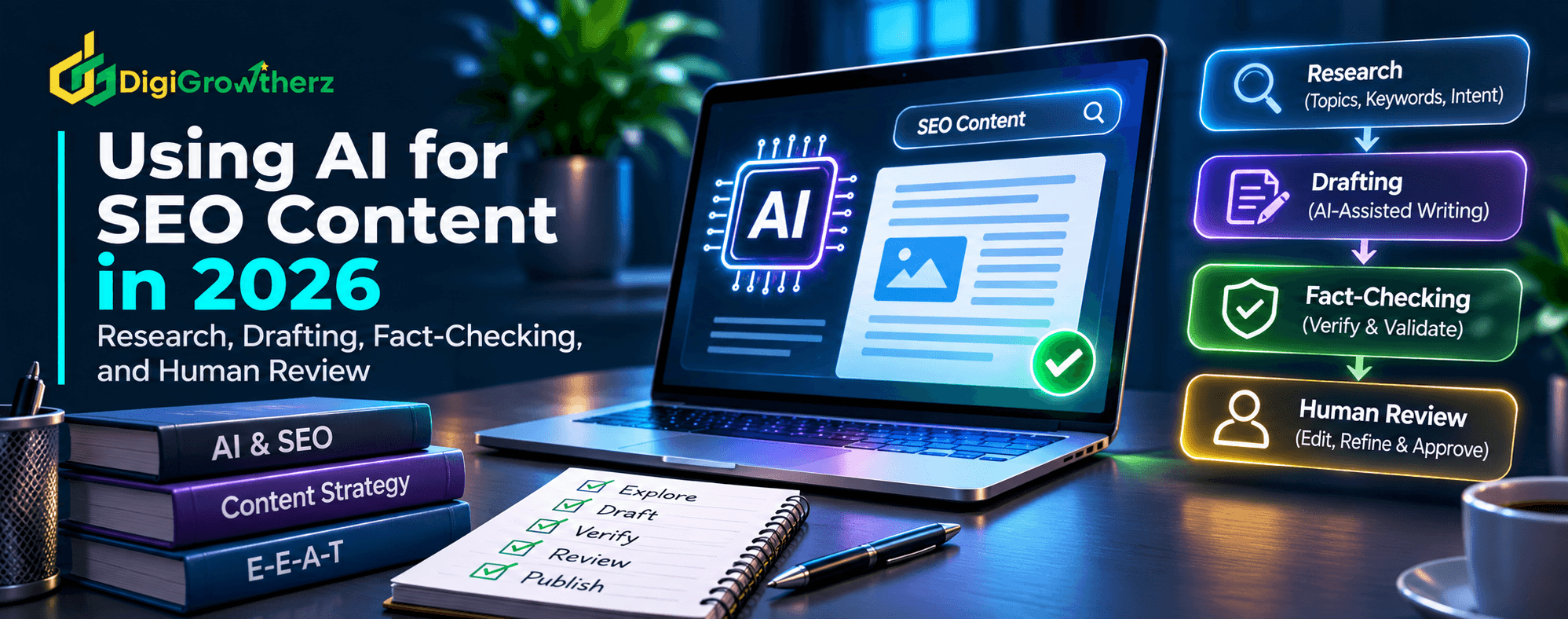
Using AI for SEO Content in 2026: Research, Drafting, Fact-Checking, and Human Review
Learn how to use AI throughout the SEO content creation process, from keyword research and content planning to drafting, fact-checking, and human editing. Discover a practical workflow for producing accurate, useful, search-friendly content without relying on mass-produced AI articles.
D
DigiGrowtherz
DigiGrowtherz
Artificial intelligence has changed how businesses research topics, plan articles, and produce website content. Tasks that previously required hours of manual preparation can now be supported by AI tools that organize information, suggest content structures, summarize research, and help create initial drafts.
However, producing content quickly does not necessarily mean producing content that deserves to rank in search results.
AI can suggest an incorrect statistic, misunderstand search intent, generate a citation that does not exist, or create an article that sounds professional but provides little original value. Publishing that content without proper review can damage reader trust and weaken a website's overall content quality.
For businesses investing in organic search, the goal should not be to publish as many AI-generated articles as possible. It should be to use AI where it improves productivity while maintaining human responsibility for research quality, accuracy, originality, and editorial decisions.
This guide explains how to use AI for SEO content in 2026, covering the complete workflow from research and drafting to fact-checking, human review, optimization, and ongoing performance measurement.
What Does Using AI for SEO Content Actually Mean?
Using AI for SEO content means incorporating artificial intelligence into the process of planning, researching, writing, reviewing, and optimizing website content for search visibility and reader usefulness.
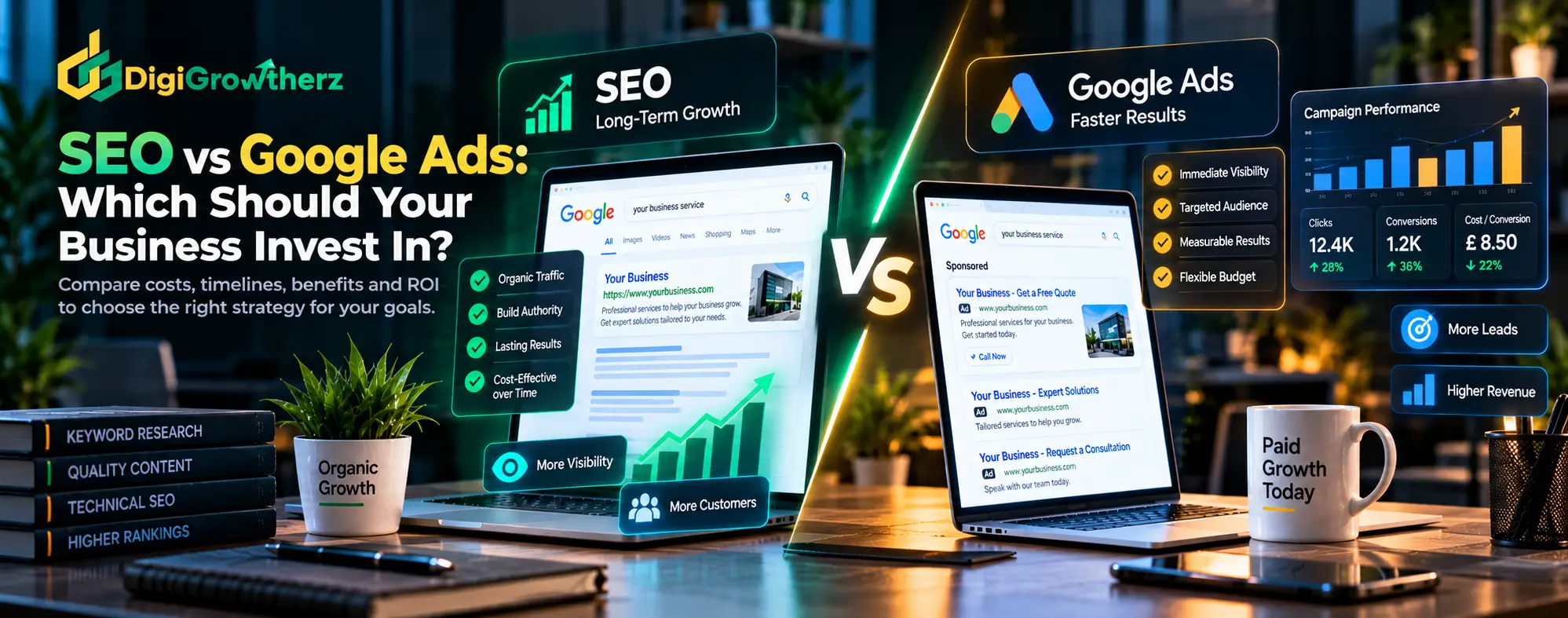
Should your business invest in SEO or Google Ads? Compare costs, timelines, benefits, limitations, and potential returns to determine which strategy fits your goals. Learn when to prioritize organic search, when paid advertising makes sense, and how combining both can build a more sustainable customer acquisition strategy.
Generating potential article topics from a business's existing services and audience needs.
Organizing keyword ideas into related topic groups.
Identifying questions and subtopics worth researching.
Creating article outlines and content briefs.
Preparing initial drafts from approved research.
Simplifying complex explanations.
Identifying potential factual inconsistencies.
Reviewing headings, metadata, and internal linking opportunities.
Helping update older articles when information changes.
However, AI should not be treated as an independent source of truth.
A language model generates responses based on patterns in its training data and available context. It may produce convincing statements that are inaccurate or unsupported.
Google's guidance also makes an important distinction: using generative AI is not automatically a violation of its search policies. The concern is producing large quantities of unoriginal content primarily to manipulate search rankings rather than helping visitors.
The most effective approach is therefore AI-assisted content production with human research, verification, and editorial control.
1. Start With Keyword Research and Search Intent
Before asking an AI tool to write an article, determine what people are actually looking for.
A common mistake is choosing a keyword, entering it into an AI tool, and immediately generating a complete article. This can produce content that includes relevant terminology but does not answer the user's actual question.
Keyword research should establish both the topic and the purpose behind the search.
Identify the primary keyword
Begin with a topic related to your business, products, services, or audience.
For example, a business providing automation solutions might consider topics such as:
AI invoice processing.
Business workflow automation.
Automating customer support.
AI tools for small businesses.
Reducing manual data entry.
AI can generate related keyword ideas, alternative phrases, and questions that users may ask.
However, suggested keywords are ideas, not verified keyword research data.
Use dedicated SEO research tools and available search data to investigate search demand, competing pages, related queries, and the language people actually use.
Do not assume that an AI-generated search-volume figure or keyword difficulty score is accurate unless it comes from a verified data source.
Understand the search intent
Search intent describes what someone wants to accomplish when entering a query.
Four common intent categories are:
Search intent
What the user wants
Example query
Informational
Learn something or solve a problem
How does AI invoice processing work?
Navigational
Find a particular website or brand
DigiGrowtherz services
Commercial
Compare solutions before deciding
Best AI automation tools for small businesses
Transactional
Take an action or make a purchase
Hire an AI automation company
The content should match the dominant intent.
For example, someone searching for "how does AI invoice processing work" probably expects an explanation of the process, benefits, limitations, and implementation considerations.
A service sales page alone may not satisfy that query.
Likewise, someone searching for "AI automation services" may be looking for providers rather than a lengthy educational explanation.
Use AI to analyze search results
AI can help summarize patterns from relevant search results that you provide.
You can use it to identify:
Common questions addressed by competing articles.
Topics covered repeatedly.
Missing explanations or useful examples.
Different content formats appearing in results.
Potential gaps between a searcher's question and available information.
However, the actual search results should be inspected manually.
Do not ask AI to invent what the current search results look like or assume that its knowledge of a topic represents today's search landscape.
Practical recommendation: Combine AI-assisted keyword discovery with actual search results, SEO tool data, and an understanding of your customers. This produces a much stronger foundation than generating keywords from AI suggestions alone.
2. Research the Topic Before Drafting
Research should happen before article generation, not after an entire article has already been written.
When AI drafts content without reliable source material, it may fill missing information with assumptions. This is particularly problematic for articles involving technology, regulations, security, pricing, statistics, or platform capabilities.
Establish a reliable source hierarchy
Different sources provide different levels of evidence.
A practical research hierarchy is:
1. Primary sources
Start with organizations directly responsible for the information.
Examples include:
Official government publications.
Regulatory authorities.
Official technical documentation.
Product documentation from the relevant provider.
Research papers and original studies.
Official standards and specifications.
2. Reputable secondary sources
Use established publications, industry research, and independent expert analysis to understand broader trends and interpretations.
3. Community discussions
Forums and professional communities can help reveal real-world problems, user experiences, and questions that official documentation may not address.
However, individual discussions should not be presented as verified industry-wide facts.
Build a source record
For every important claim, maintain a simple source record.
Research field
What to record
Claim
The fact or statement being investigated
Source
Original source URL
Publisher
Organization responsible for the information
Publication date
When the information was published or updated
Evidence
Relevant passage, table, or documentation
Limitations
Conditions, exceptions, and uncertainty
Verification
Whether the claim has been independently checked
This is especially valuable for topics where information changes frequently.
For example, if an article discusses AI API pricing, record the provider's official pricing page and the date it was checked. Do not rely on an old blog post that may contain outdated prices.
Identify vendor bias
A software provider's documentation is often the most authoritative source for its own features and technical requirements.
However, its marketing claims should not automatically be treated as independent evidence of overall business performance.
For example, a vendor may describe its tool as improving productivity. That does not prove every business using the tool will achieve the same improvement.
Separate factual product information from promotional statements.
AI can help identify which claims need independent evidence, but the final assessment should be made by a human reviewer.
3. Create an SEO Content Brief and Article Outline
Once the research is available, prepare a structured content brief.
This gives the AI tool a clear understanding of what the article should accomplish before it generates paragraphs.
A useful content brief includes:
Content element
Purpose
Primary keyword
Defines the main topic
Supporting keywords
Adds relevant subtopics
Search intent
Establishes what readers expect
Target audience
Defines who the article serves
Main problem
Identifies what the reader wants to solve
Key questions
Establishes what the article must answer
Source material
Provides reliable research
Internal links
Connects relevant pages on your website
Unique perspective
Identifies the value beyond existing articles
CTA
Defines the appropriate next step
Use AI to build the outline
AI can help organize the research into logical sections.
For example, an article about AI invoice processing might include:
What AI invoice processing is.
How the process works.
Common business applications.
Benefits and limitations.
Implementation requirements.
Data security considerations.
Costs and expected outcomes.
How to evaluate a solution.
The outline should follow the reader's journey rather than simply repeat keywords in multiple headings.
Check for content overlap
Before drafting, compare the proposed article with existing content on your website.
This helps prevent keyword cannibalization, where multiple pages target similar search queries without offering sufficiently distinct value.
For example, a website may already have an article about AI automation for small businesses.
A new article about AI-powered invoice processing should explore a more specific topic, including document extraction, validation, integrations, and exceptions, rather than repeating the same general introduction to AI automation.
AI can compare existing titles, summaries, headings, and URLs to identify possible overlaps.
However, the final decision should consider the pages' actual search intent and usefulness, not just similarities between their keywords.
4. Use AI to Prepare the First Draft
Once the research and outline are approved, AI can help turn the material into a readable initial draft.
This is one of the most productive uses of AI in content creation, particularly for articles that require a consistent structure.
However, the quality of the draft depends heavily on the information and instructions supplied.
Give AI enough context
A useful drafting prompt should explain:
The intended audience.
The article's main purpose.
The primary search intent.
The approved outline.
The source material.
The desired writing style.
Important facts and limitations.
Claims that must not be invented.
The relevant business context.
Avoid vague instructions such as "Write a 2,000-word SEO blog about AI."
Such prompts often produce predictable introductions, generic advice, repetitive sections, and unsupported statements.
A practical AI drafting prompt
You can use the following template when preparing a first draft:
Act as an experienced SEO content researcher and editor.

Prepare an article using the approved content brief
and research sources supplied below.

Requirements:

1. Match the article to the identified search intent.
2. Write for the specified target audience.
3. Follow the approved heading structure.
4. Use the supplied research to support factual claims.
5. Do not invent statistics, studies, quotes, citations,
   product capabilities, prices, or technical details.
6. Clearly distinguish facts from recommendations.
7. Explain limitations and relevant exceptions.
8. Avoid keyword stuffing and repetitive explanations.
9. Include relevant internal links where appropriate.
10. Use a natural, clear, professional writing style.

If the available research does not support a claim,
mark it for further verification instead of guessing.

CONTENT BRIEF:
[Insert approved brief]

APPROVED SOURCES:
[Insert verified source material]

ARTICLE OUTLINE:
[Insert approved outline]
This prompt helps establish boundaries, but it does not guarantee that every generated statement will be accurate.
The resulting draft must still go through fact-checking and human editing.
Draft in sections
For longer articles, generating the complete article in one request may create repetition or reduce consistency.
A more controlled approach is to draft one section at a time.
For each section:
Provide the relevant research.
Explain the section's purpose.
Generate the initial explanation.
Check whether it answers the intended question.
Remove unnecessary repetition.
Continue to the next section.
This makes it easier to maintain a consistent argument and identify unsupported claims early.
5. Fact-Check Every Important AI-Generated Claim
Fact-checking is one of the most important stages in an AI-assisted SEO workflow.
A generated article can be grammatically polished and still contain incorrect information.
AI systems can confidently produce incorrect facts, fabricated references, inaccurate quotations, and statements that contradict their source material.
The National Institute of Standards and Technology identifies this problem as confabulation in its Generative AI Risk Management Profile. It explains that generative AI systems can produce erroneous or false content and even fabricated citations.
That is why an AI-generated reference should never be considered verified simply because it looks complete.
Prioritize high-risk claims
Not every sentence requires the same level of checking.
Pay particular attention to:
Statistics and percentages
Verify the original research, sample size, publication date, and conditions behind the reported figure.
Do not use a statistic without understanding what it actually measures.
Pricing and costs
Check current provider documentation or official pricing pages. Confirm currencies, billing units, usage limits, and applicable conditions.
Technical claims
Verify software capabilities, API behavior, compatibility, supported features, and technical requirements against current documentation.
Legal and regulatory claims
Use the relevant legislation, official regulatory guidance, and appropriate professional sources. Avoid presenting general information as personalized legal advice.
Security claims
Check the actual technical documentation and relevant security standards. Avoid declaring a system completely secure or risk-free.
Quotes and citations
Open the original source and confirm that the quotation exists and supports the statement attributed to it.
Use a claim-by-claim verification process
A practical fact-checking table looks like this:
Article claim
Verification required
Result
A platform supports a specific AI feature
Current official documentation
Verified / Revise
A tool costs a particular amount
Current official pricing page
Verified / Update
AI reduces processing time by a stated percentage
Original study or reliable measurement
Verified / Remove
A regulation requires a certain action
Official legal or regulatory source
Verified / Qualify
A technical system supports offline operation
Platform documentation and conditions
Verified / Correct
If a claim cannot be verified, remove it, qualify it, or explain that reliable evidence is unavailable.
Never keep a questionable statistic simply because it makes the article sound more convincing.
6. Human Review: Turn an AI Draft Into Valuable Content
Human review is not just proofreading.
It is where a generic draft becomes an article that reflects real business understanding, meaningful analysis, and editorial judgment.
An AI tool can organize information and produce explanations, but a knowledgeable human should decide whether the material is accurate, useful, complete, and appropriate for the intended audience.
Check factual accuracy and meaning
Read the article from beginning to end.
Ask:
Are the explanations technically correct?
Do the examples reflect realistic business situations?
Are the stated benefits supported by evidence?
Are important limitations missing?
Does the conclusion accurately reflect the discussion?
Are there contradictions between sections?
Pay particular attention to sentences that sound authoritative but make broad claims without providing evidence.
Add original business insight
A major limitation of generic AI drafts is that they can repeat common industry explanations without adding anything distinctive.
Human reviewers should introduce useful details such as:
Practical implementation experiences.
Real business process examples.
Lessons from completed projects, where documented.
Relevant industry-specific challenges.
Common mistakes observed during implementation.
Original comparisons and decision-making guidance.
For example, an article about AI-powered customer support should explain why automatically answering every customer query may not be appropriate.
Some questions require account verification, financial approval, or human judgment. Explaining these boundaries gives the reader more useful information than simply listing the advantages of chatbots.
Only describe actual project results or experiences when they are genuinely documented. Do not invent client stories or performance improvements to make an article appear original.
Improve natural writing and readability
AI-generated drafts sometimes contain repetitive phrases, predictable introductions, and unnecessary conclusions.
Human editing should improve:
Sentence variation.
Paragraph flow.
Explanation clarity.
Transition between sections.
Tone consistency.
Examples and illustrations.
Relevance to the target audience.
A useful test is to remove any paragraph that repeats an earlier explanation without introducing new information.
Establish editorial responsibility
A published article should have an accurate author or responsible publisher.
Where appropriate, include an author biography or reviewer information that genuinely reflects the person's background.
Google recommends making authorship clear through accurate bylines and providing information about who created content. It also advises transparency about the role of automation when readers would reasonably expect to know how content was produced.
AI assistance does not remove human responsibility for what a business publishes.
7. Optimize the Final Article for SEO
After research, drafting, verification, and editing, optimize the article for search discovery.
SEO optimization should improve clarity and accessibility rather than force keywords into every section.
Write a clear SEO title and H1
The title should accurately communicate the article's main subject.
For example:
"Using AI for SEO Content in 2026: Research, Drafting, Fact-Checking, and Human Review"
The SEO title and visible H1 can be closely aligned, but they should describe the actual article rather than promise benefits that the content does not deliver.
Google uses several sources when generating search-result title links, including the page title element, visible main heading, and other prominent page information. It recommends descriptive, concise titles.
Prepare a useful meta description
The meta description should summarize what the reader will learn.
Avoid generic descriptions that could apply to hundreds of articles.
Google may generate snippets directly from page content rather than always using the supplied meta description. A well-written description can help communicate the page's purpose, but it does not guarantee that Google will display it exactly as written.
Use headings logically
Organize the content with a clear hierarchy.
Use H2 headings for major sections and H3 headings for related subtopics.
Include relevant phrases naturally, but do not force the primary keyword into every heading.
Headings should help readers understand the structure before reading every paragraph.
Add relevant internal links
Internal links connect related articles and service pages across your website.
For example, an AI-assisted SEO article could link to:
Relevant SEO services.
Digital marketing services.
Related articles about AI search.
Guides about business automation.
Use descriptive anchor text so visitors understand where a link leads.
Avoid adding unrelated links simply to increase the number of internal links.
Optimize images and structured data
Use relevant images that support the article's subject.
Write meaningful alternative text for informative images. Avoid stuffing image descriptions with keywords.
For an article page, structured data such as Article or BlogPosting can help search engines understand details including the headline, author, publication date, and modification date.
Google recommends accurate author information, visible and representative article images, and appropriate publication metadata when using Article structured data.
Structured data does not guarantee a rich result or better ranking.
Do not chase special AI SEO tricks
As of 2026, Google's documentation explains that the same foundational SEO practices apply to AI search features such as AI Overviews and AI Mode.
There are no additional requirements or special AI-specific markup necessary for a page to be considered for these features.
Google continues to emphasize accessible content, internal linking, technical eligibility, and helpful, reliable information.
The practical lesson is to build strong content that helps people rather than trying to optimize for speculative AI ranking tricks.
8. Avoid Common Mistakes When Using AI for SEO Content
AI can improve productivity, but poor processes can reduce content quality.
Here are some mistakes businesses should avoid.
Publishing without verification
An article may sound confident while containing incorrect facts, outdated details, or fabricated references. Verify important claims before publication.
Generating large volumes of similar articles
Publishing many articles that repeat the same information with different keywords does not automatically build authority.
Google identifies scaled content abuse as generating large amounts of unoriginal, low-value content primarily to manipulate search rankings. This policy applies regardless of whether the content is created by AI, humans, or a combination.
Writing without understanding search intent
An article can target the correct keyword but still fail to answer what the user wants to know.
Research the actual topic and expected information before drafting.
Using AI as the only research source
AI-generated explanations and references need independent verification. Use reliable primary sources for important claims.
Ignoring originality
A draft that simply summarizes several competing articles may provide little additional value.
Add useful examples, thoughtful comparisons, original explanations, and genuine business insight.
Over-optimizing keywords
Repeating the same phrase unnaturally can make content difficult to read.
Use related terminology naturally and prioritize answering the reader's question.
Neglecting content updates
Technical documentation, product capabilities, pricing, and regulations can change.
Review important articles periodically rather than assuming a published article will remain accurate indefinitely.
9. Measure the Results After Publishing
Publishing an article is not the end of the content process.
Businesses should monitor whether the article is attracting relevant visitors and helping readers move toward useful next steps.
Google Search Console provides performance information such as impressions, clicks, click-through rate, average position, search queries, and page-level results.
Track SEO performance
Useful indicators include:
Metric
What it tells you
Impressions
How often the page appears in Google Search
Clicks
How often searchers visit the page
CTR
The proportion of impressions that generate clicks
Average position
The average position of the topmost result
Search queries
The searches that bring visibility to the page
Organic conversions
Whether visitors take meaningful business actions
Do not judge success through rankings alone.
A page can receive search impressions without attracting the right audience. Similarly, a page can generate fewer visits but produce more relevant business inquiries.
Identify opportunities for improvement
After collecting enough performance data, look for patterns.
For example:
High impressions but low CTR may indicate that the title or search-result description needs improvement.
Visibility for unexpected queries may reveal additional questions worth addressing.
Visitors leaving without taking useful action may indicate that the article needs clearer explanations or better navigation.
Strong engagement but few inquiries may suggest that the CTA or service connection needs improvement.
Make changes based on evidence rather than repeatedly rewriting articles without a clear reason.
10. A Practical AI-Assisted SEO Content Workflow
Businesses can bring all these activities together in a repeatable editorial process.
Stage
AI's role
Human responsibility
Topic selection
Generate possible topics
Select relevant business opportunities
Keyword research
Suggest related terms and questions
Verify search demand and intent
Research
Organize information and source leads
Check original sources and evidence
Content brief
Suggest structure and subtopics
Approve scope and originality
Drafting
Prepare initial sections
Guide content and correct inaccuracies
Fact-checking
Identify claims that need checking
Verify facts, dates, sources, and statistics
Editing
Suggest clarity and readability improvements
Ensure accuracy, voice, and usefulness
SEO optimization
Review metadata and headings
Approve technical and editorial elements
Publication
Assist with final checks
Take responsibility for the published article
Measurement
Help interpret performance data
Decide what to improve or update
This approach creates a clear separation between tasks that AI can accelerate and decisions that require human responsibility.
A simple weekly editorial process
For a business publishing regularly, a practical schedule might look like this:
Planning: Select topics based on customer needs, business relevance, and keyword research.
Research: Gather reliable sources and prepare claim records.
Production: Use AI to help prepare outlines and initial drafts.
Editorial review: Check accuracy, add original insights, and improve readability.
Publication: Complete on-page SEO, internal links, metadata, and technical checks.
Evaluation: Review performance data and identify useful updates.
The exact schedule should depend on available resources and the research required for each topic. Publishing fewer well-researched articles can be more valuable than publishing a large number of repetitive articles.
Conclusion: Use AI to Improve SEO Content, Not Replace Editorial Judgment
AI can make SEO content production more efficient by supporting research, keyword discovery, outlining, drafting, editing, and optimization.
But these capabilities are only valuable when the final content remains accurate, original, useful, and relevant to the intended audience.
The strongest workflow combines AI's ability to organize and generate information with human research, independent fact-checking, real business insight, and editorial responsibility.
For businesses, the goal should not be to publish more articles simply because AI makes production faster. It should be to create content that answers genuine customer questions, demonstrates relevant knowledge, and supports long-term search visibility.
Use AI to accelerate the work. Use reliable evidence to establish accuracy. Use human judgment to make the content worth reading.
A practical guide to building a repeatable lead generation system that attracts the right prospects, captures enquiries, qualifies leads, and turns opportunities into customers. Learn how to connect your website, SEO, social media, CRM, follow-up, and automation into one measurable business process.
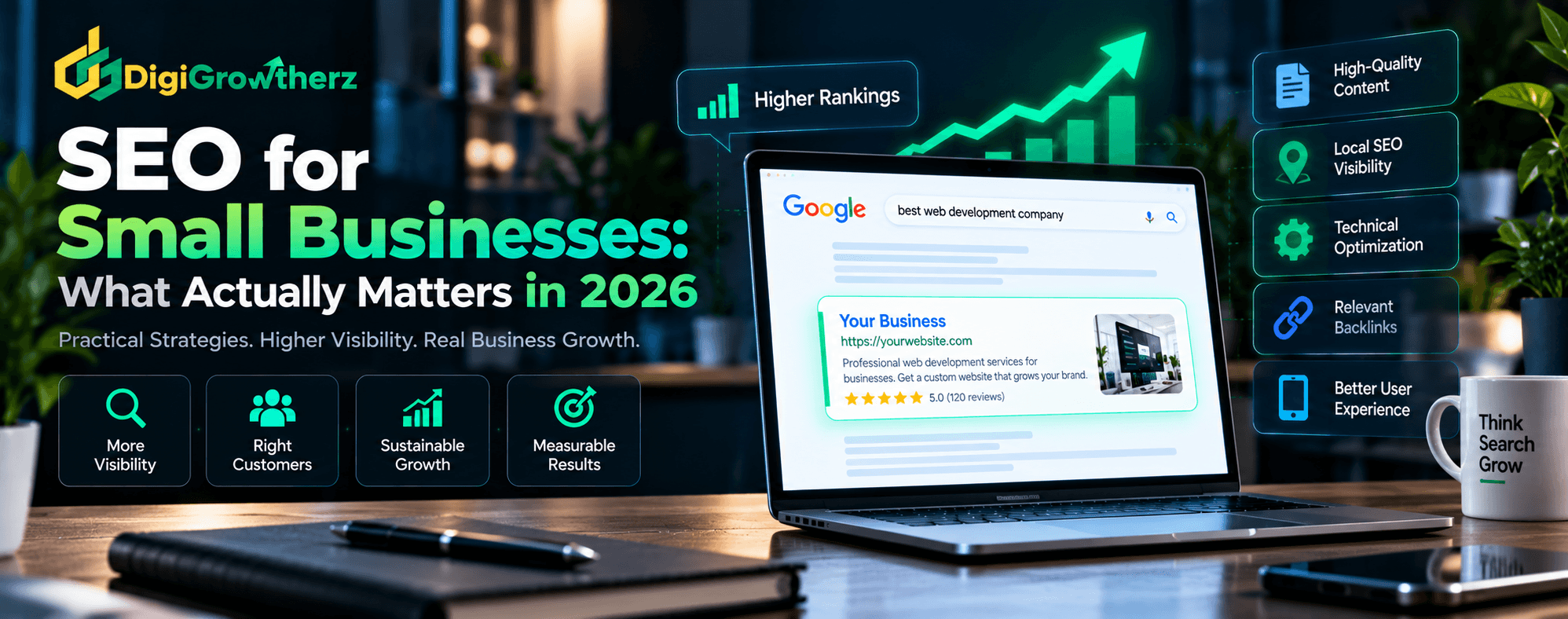
Small businesses don't need to chase every SEO trend to compete on Google. Learn how to prioritize search intent, helpful content, technical SEO, local visibility, website performance, and measurable business results to build sustainable organic growth in 2026.